
Infrared Sauna vs Traditional Sauna: What's Actually Different?
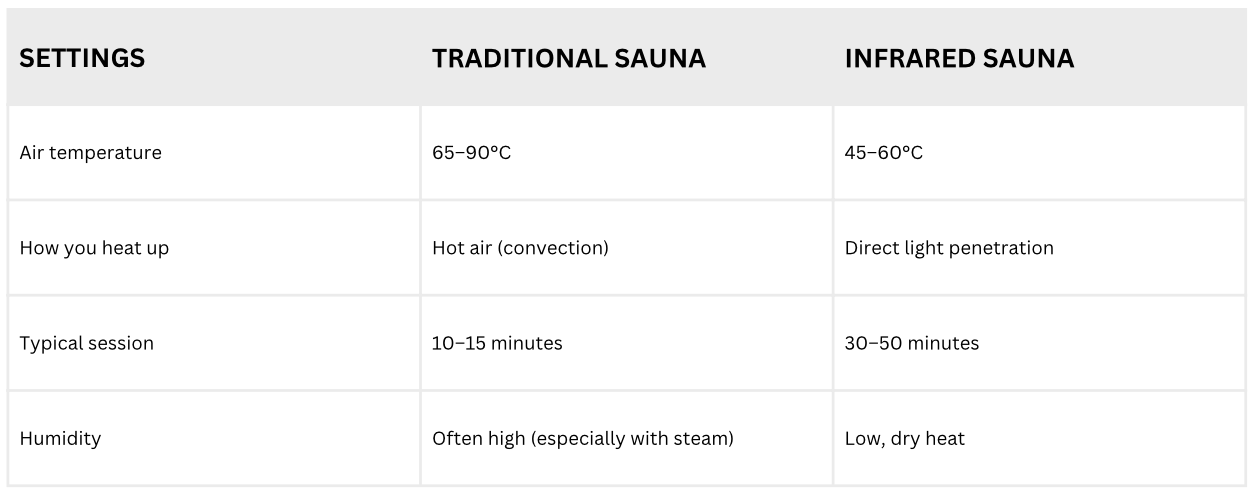
The short answer: a traditional sauna heats the air around you to 65–90°C, and your body absorbs that heat from the hot air.
An infrared sauna heats you directly using infrared light, at a much lower air temperature of around 45–60°C.
Same broad idea, deep heat, a proper sweat, recovery benefits, but a genuinely different experience and a different way of getting there.
If you've been comparing the two before booking, here's what actually matters.
How Each One Actually Works
A traditional sauna, the kind you'll find in most gyms, heats the room.
Wood, electric, or gas heaters warm rocks or the air directly, and your body heats up through that surrounding hot air, the same way you'd warm up standing near a fire. It's intense, it's fast, and the heat is very much around you.
An infrared sauna skips heating the room and instead uses infrared light to warm your body directly: your muscles, tissues and skin absorb that light as heat, rather than waiting for hot air to do the job.
That's why you can run an infrared sauna at a much lower air temperature and still get a deep, genuine sweat: the heat isn't relying on the room being unbearably hot, it's going straight to you.
Temperature and Session Length, Side by Side
That session length difference is one of the most practical distinctions.
Because infrared heat is gentler on the air around you, most people can comfortably stay in for much longer, which is exactly why our Private Infrared Sauna sessions run a full 50 minutes rather than the 10–15 minutes you'd typically manage in a traditional sauna.
Which One Feels Different in the Room
Walk into a traditional sauna and the heat hits you immediately, thick, intense, often humid if water's being added to the rocks.
It's a fast, high-intensity experience, and for some people that intensity is exactly the point.
An infrared sauna feels noticeably different.
The air itself isn't nearly as hot, so breathing is more comfortable and it doesn't have that "wall of heat" feeling the moment you walk in.
The sweat still comes, often described as feeling deeper and more sustained, it just builds gradually rather than hitting you all at once.
This is a big part of why people who find traditional saunas overwhelming still get on well with infrared.
What the Research Actually Shows
Worth being straight about this one: traditional saunas have the longer research track record, particularly out of Finland, where regular sauna use has been linked to cardiovascular and longevity benefits in large population studies.
It's the more established, better-studied option.
Infrared sauna research is newer and the studies are smaller, but the early evidence points to real benefits for chronic pain relief, post-exercise recovery, and general relaxation, with the added practical advantage of being more tolerable for people who are heat-sensitive or who simply can't handle the intensity of a traditional sauna long enough to get much out of it.
Neither one is "better" across the board, they're solving a similar problem in different ways, and the right one depends on how your body responds to heat.
Which One Is Right for You
If you love the classic, intense sauna experience and your body handles high heat well, a traditional sauna delivers that in a shorter session.
If you find traditional saunas hard to tolerate, want to stay in longer without the intensity, or you're using sauna time as much for mental reset as physical recovery, infrared is usually the better fit, it lets you settle in, breathe easily, and actually relax into the full session instead of counting down the minutes.
What to Expect in SELF's Private Infrared Sauna
We chose infrared for our private sauna space specifically because of that longer, more comfortable session.
Infrared light penetrates your muscles, tissues and cells directly, without the harsh UV exposure of direct sun, and the lower air temperature means you can settle in for a full 50 minutes rather than gritting your teeth through ten.
That extra time is what people mean when they describe the sweat as deeper and more thorough, it's not more intense, it's more sustained.
Sessions are fully private (space for two), and you can pair it with a hot plunge and ice bath for the full contrast effect, or book it on its own if sauna is all you're after.
Frequently Asked Questions
Is an infrared sauna as effective as a traditional sauna? They're effective in different ways rather than one being strictly better. Traditional saunas have more research behind them, particularly for cardiovascular benefits, while infrared offers a longer, more tolerable session that suits people who find high heat overwhelming.
How hot does an infrared sauna actually get? Typically between 45–60°C, noticeably cooler than a traditional sauna's 65–90°C, even though the heat you feel in your body can be just as deep.
Is infrared sauna safer for people with heart conditions? The lower air temperature can make it more comfortable, but contrast between hot and cold still places demand on your cardiovascular system either way. If you have a heart condition, high blood pressure, or are pregnant, check with your doctor before booking either type.
How long should a session actually last? For infrared, most people comfortably do 30–50 minutes once they're used to it, that's why our sessions are set at 50 minutes. For traditional saunas, 10–15 minutes is the more typical, comfortable range.
Can beginners handle infrared better than traditional heat? Generally yes. The lower air temperature and easier breathing make infrared a gentler entry point if you've never done a proper sauna session before, or if intense heat has put you off in the past.
Curious to try it for yourself? Book a Private Infrared Sauna session at SELF Wellness Space, corner of Featherston & Ward Street, Palmerston North.
